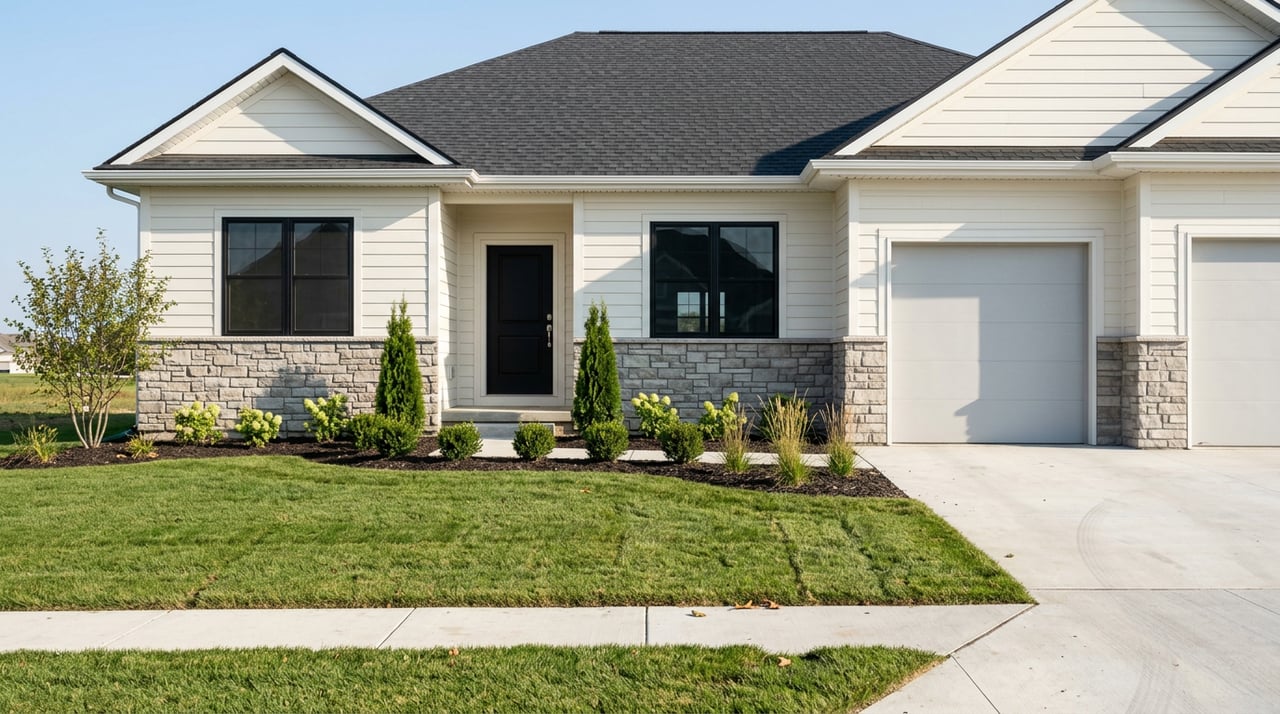
Picture two listings going live the same week. One is a 1998 rambler in Wedgewood, the kind of established lot with mature trees and a finished basement that's hosted three decades of holidays. The other is a 2016 two-story in Stonemill Farms, built to a newer code, with a bright walkout level and the kind of open plan buyers ask for by name. Ask most buyers which one is more likely to have a radon problem, and they'll point to the older house without hesitating.
They'd be guessing, and the guess would be wrong about as often as it's right.
Radon in a Woodbury home has almost nothing to do with the year it was built or which subdivision it sits in. It has everything to do with the individual foundation, the sump pit, and whether anyone ever sealed it. That single fact reshapes how sellers should think about disclosure and how buyers should think about their inspection contingency, and it's the thread running through everything below.
The Assumption Newer Construction Doesn't Actually Support
Minnesota's building code added basic passive radon controls to new-construction requirements starting in 2009. A home built after that date, wherever it sits in Woodbury, likely went up with a rough-in layout designed to make future mitigation easier. A home built earlier, including much of the more established housing stock in neighborhoods like Wedgewood with their mature tree canopies and larger lots, simply predates that requirement.
It's tempting to read that as "newer is safer." It isn't. A code-required layout is a plumbing detail, not a test result and not a mitigation system. It changes how easy a future fix is, not whether the house has a problem today. Wedgewood's homes, which typically run from the mid $500,000s into the $1.2 million range for the neighborhood's larger custom lots, and Stonemill Farms' mix of townhomes and single-family homes in the $400,000s to $700,000s, sell across the same geology. A rambler from the 1990s and a two-story from 2016 draw radon from the same glacial soils that sit under most of the east metro. Neither price point nor build year tells you what that particular foundation is doing with it.
What The Radon Awareness Act Actually Requires
The confusion starts because Minnesota does regulate radon in home sales, just not in the way most people assume. The Minnesota Radon Awareness Act, Minnesota Statutes 144.496, took effect January 1, 2014, and applies to nearly every residential sale in Woodbury, including sales by contract for deed and lease-to-own arrangements.
Before a purchase agreement is signed, the seller has to provide a written disclosure covering:
- Whether a radon test has ever been done on the property
- The most current records and reports on any radon concentrations found
- A description of any radon concentrations, mitigation, or remediation work
- Documentation on any mitigation system already installed
- The state's required radon warning statement
The seller also has to hand over a copy of the Minnesota Department of Health's publication, Radon in Real Estate Transactions. A seller who knows about elevated radon and fails to disclose it is liable to the buyer, who has up to two years after closing to bring a claim.
What The Law Doesn't Require, And Why That Trips People Up
Here's where most of the confusion in a Woodbury transaction actually lives.
| What sellers often assume | What the statute actually says |
|---|---|
| "I have to test before I list" | Testing is not required. Disclosure covers only what you already know. |
| "If my results are under 4.0 pCi/L, I don't have to say anything" | Every prior test result must be disclosed, regardless of the number. |
| "A high reading kills the sale" | There's no statutory threshold that blocks a closing. It's a negotiation, not a wall. |
The 4.0 picocuries per liter figure that shows up everywhere is an EPA and Minnesota Department of Health action level, the point at which mitigation is recommended. It was never written into the statute as a disclosure trigger. A seller who tested at 2.1 pCi/L five years ago still has to disclose that number. A seller who has never tested simply discloses that no test has occurred, because the law is built around what a seller knows, not what a seller is obligated to find out.
Why The Sump Pit Matters More Than The Subdivision
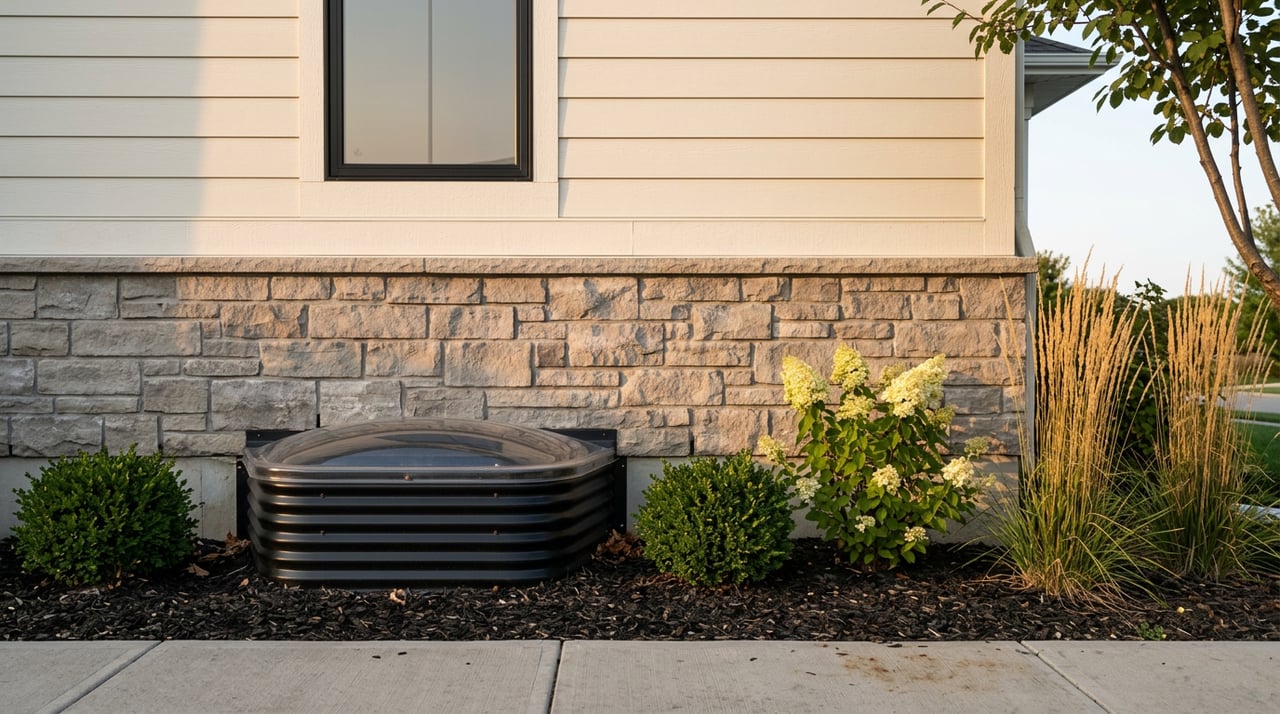
Radon gets into a house through cracks in the slab, floor-wall joints, and open sump pits, moving up from soil where it's produced naturally by decaying uranium. A basement's perimeter drain tile, the gravel-filled trench that channels groundwater to the sump pump, is also highly permeable to soil gas. That makes an unsealed sump pit one of the more direct paths radon has into a finished basement, whether that basement is under a Wedgewood rambler or a Stonemill Farms two-story.
A plastic snap-on cover on a sump pit keeps toys and tools from falling in, but it isn't airtight. The pump cord and discharge pipe pass through unsealed gaps, and soil gas moves right past them. A properly sealed radon lid clamps down on a gasket and routes every penetration through a sealed grommet, which is a meaningfully different piece of hardware even though both look similar from across a basement.
This is also why neighbors can get wildly different results from the same soil. One radon inspection firm working in Minnesota has described testing a property where the seller's brother, living next door on identical ground, had tested low and encouraged them to skip testing altogether. They tested anyway and came back well above the EPA's action level. Foundation construction and sump sealing vary house to house even when the dirt underneath doesn't.
How Radon Actually Moves Through A Woodbury Closing
A radon test doesn't have to slow down a typical purchase. Here's how it usually fits inside a standard 30 to 45 day timeline from accepted offer to closing:
- The disclosure, including any past test results or the fact that none exist, goes into the packet when the purchase agreement is signed.
- If the buyer wants current data, a radon contingency gets added to the purchase agreement, allowing testing during the inspection period.
- A short-term test, the kind most commonly used in real estate transactions, runs two to seven days.
- If results come back at or above 4.0 pCi/L, the buyer and seller negotiate from there. The buyer can ask the seller to mitigate, ask for a credit, or walk away. None of that is set by statute. It's handled the same way any other inspection item gets handled.
- If mitigation is agreed to, local providers typically install a sub-slab depressurization system in under a day, with systems commonly priced in the $1,000 to $1,700 range depending on the foundation and how many suction points the layout needs.
None of that has to be a surprise if it's planned for before the first showing.
What This Means If You're Listing This Season
The practical move for a Woodbury seller isn't to panic about radon. It's to stop treating your subdivision or your build year as a proxy for the answer. If you've never tested, say so on the disclosure and consider ordering a test before you list, so you're negotiating from data instead of reacting to a buyer's contingency results under deadline pressure. If you have a finished basement with an open or loosely covered sump pit, that's worth a look regardless of whether your home went up in 1994 or 2018.
Buyers should apply the same logic in reverse. A newer-construction home in a community like Dancing Waters or Bailey's Arbor built after 2009 may carry the passive rough-in, but that's not the same thing as a home that's been tested. It's a home that would be somewhat easier to mitigate if a test comes back high. Ask for the disclosure, read what it actually says, and don't skip your own contingency test just because the listing looks new.
A Few Questions We Hear Often
Does a Woodbury seller have to test for radon before putting a home on the market? No. The statute requires disclosure of what you know, not a mandatory test. Many sellers choose to test anyway so they aren't negotiating under a buyer's timeline.
If a neighboring Woodbury home tested low, does that tell me anything about mine? Not reliably. Radon depends on the individual foundation and how the sump pit is sealed, not on the shared soil under a block of homes. Adjacent houses on the same street have produced very different results.
What actually happens if a test comes back above the action level during my purchase agreement? It becomes a negotiation like any other inspection finding. The buyer can ask for mitigation, a credit, or choose to walk. Minnesota law doesn't set an automatic outcome, and most Woodbury transactions resolve it the same way they'd resolve a furnace or roof finding.
Radon disclosure isn't the kind of thing that should derail a Woodbury sale, but it's exactly the kind of detail that catches people off guard when nobody explained it ahead of time. If you're weighing a listing this fall or trying to make sense of a disclosure packet you just received, the team at Platinum Real Estate Team can walk through what your specific documents say and what they don't. Request Your Complimentary Home Valuation and we'll help you plan the rest of the transaction around it, not just the radon question.